


Search

Search
Certifications
News & Events
3-A Knowledge Center

Vishali Poswal is one of 11 students selected to receive a 3-A SSI 2026 Dr. Ron Schmidt Student Travel Award. A Ph.D. student at South Dakota State University, Vishali studies how to control and understand Listeria persistence in dairy processing environments, work that sits at the intersection of food safety and hygienic design. Vishali plans to work in risk assessment and risk modeling.
The award, Vishali said, deepened an understanding of hygienic design and its role in food safety across the industry. Her experience at the 3-A SSI 2026 Summit on Hygienic Design clarified the challenges dairy processors face and how proactive design choices support hygienic outcomes on the production floor.
One Summit presentation stood out for her: Kerry's talk on hygienic design and the shift from a reactive approach to a proactive one. Vishali pointed to the emphasis on training, culture alignment and a go-fix approach, noting that hygienic design is not only a technical problem. It is also dependent on a company's culture, its communication and its willingness to act before problems occur. Vishali added that food safety cannot rest with a single quality or safety officer; everyone on the production floor has a role to play.
What inspired Vishali most at the Summit were conversations with food and dairy professionals who have spent two or three decades in the industry. Their hard work and willingness to share their experience left an impression, and Vishali said the goal now is to give back to the dairy industry in the same way.
Vishali’s research on Listeria persistence in dairy processing environments demonstrates that the next generation of researchers is already pushing hygienic design principles forward. Below, we are proud to present her research paper, “Phenotypic and Genomic Determinants Underlying Listeria Persistence and the Ecological Role of Environmental Microflora in Dairy Processing Environments”.
Vaishali Poswal1, Sanjeev Anand1*, J.L. Gonzalez Hernandez2,3, Brian Kraus4
1Midwest Dairy Foods Research Center, Department of Dairy and Food Science, South Dakota State University, Brookings, SD, USA
2Agronomy, Horticulture & Plant Science, 3Genomics Sequencing Facility, South Dakota State University, Brookings, SD, USA
4Wells Enterprises Inc., Le Mars, IA
Listeria monocytogenes (Lm) is a major foodborne pathogen capable of causing severe illness, hospitalization, and even death, making its prevention in the food supply a critical public health priority. Despite sustained efforts by the food industry to control contamination, this organism continues to appear sporadically within food processing environments. Lm is particularly challenging to eliminate because it can persist in these facilities for years or even decades, supported by its strong stress tolerance and its ability to form resilient biofilms on food contact and non–food contact surfaces. Persistent strains are typically defined as genetically similar isolates repeatedly recovered from the same location over extended periods, often six months or longer.
Within processing facilities, Lm persistence is driven by the ability to withstand a wide range of physicochemical stressors, including low temperatures, acidic conditions, osmotic and oxidative stress, desiccation, nutrient limitation, and repeated exposure to sanitizers. These inherent tolerances are further reinforced by adaptive mechanisms such as activation of global stress response regulators and the formation of protective biofilms. Biofilm embedded cells are shielded by extracellular polymeric substances that reduce the effectiveness of sanitation and enhance survival under fluctuating environmental conditions. Genomic analyses have identified numerous persistence associated determinants in Lm, including stress response genes, biofilm associated loci, and quorum sensing systems that collectively support long term survival in processing environments.
In food processing environments, Lm is often found alongside background microflora, leading to interactions that can influence its behavior and persistence. Although substantial progress has been made in characterizing the genetic basis of Lm persistence, far less is known about how coexisting microbial communities within food processing environments influence these survival dynamics. This study integrates phenotypic, genomic, and ecological approaches to characterize environmental microflora, assess their interactions with Lm, and identify genetic determinants that may contribute to persistence within dairy processing environments.
Environmental sampling was conducted in a fully automated commercial dairy processing plant in the United States. Air and floor swab samples were collected simultaneously from six production lines in the fall, spring and summer seasons. Floor swabs were obtained from five adjacent locations along each line using EZ Reach™ sponge samplers. Airborne cultivable microorganisms were captured using a Biotest HYCON Air Sampler (RCS, SN 27617) operating at 40 L/min for 8 minutes. All samples were cultured on tryptic soy agar, and morphologically distinct colonies were identified using MALDI TOF mass spectrometry. A previously isolated Listeria monocytogenes ST5 strain from the same dairy processing environment was used as the test organism for interaction assays. Antimicrobial activity and co culture assays were performed using individual environmental isolates against this L. monocytogenes strain.
A subset of representative environmental isolates (10 from air and 12 from floor swabs), along with previously isolated Listeria spp. (Lm, L. innocua, and L. welshimeri), were subjected to whole genome sequencing. Genomic DNA was extracted using the Wizard® Genomic DNA Purification Kit and sequenced on a PromethION platform. Genome assemblies were generated using Flye v2.8.3, polished with Nanopolish v0.13.2 and Racon v1.4.3, annotated using RAST, and taxonomically classified through the Type Strain Genome Server.
A total of 167 environmental isolates were recovered, representing 30 bacterial genera, two mold genera (Aspergillus and Penicillium), and several yeasts. Pseudomonas was the only genus consistently detected across all sample types, showing the highest prevalence in floor swabs and ranking fourth in air samples. Differences in the genera recovered from air versus swab samples indicate that aerosolization from floors and drains may be limited within the processing area.
Seasonal variation was observed in both sample types. In floor swabs, the dominant genera shifted from Klebsiella in the fall to Pseudomonas in the spring and Serratia in the summer. Air samples, in contrast, were dominated by Staphylococcus in the fall, Paenibacillus in the spring, and Micrococcus in the summer.
No evidence of competitive exclusion or inhibitory activity against the Lm test strain was observed in co culture assays. Likewise, neither cell free extracts nor dialyzed extracts from environmental isolates exhibited antimicrobial activity under the tested conditions.
Subsystem analysis showed that Listeria isolates carried a defined set of genes associated with biofilm formation, antimicrobial resistance, and stress response, though these genes were present in lower abundance than in environmental cultures. Listeria possessed fewer flagellar genes but displayed strong conservation of core stress response determinants, including disinfectant and osmotic stress genes, with the SigB operon and RpoN indicating robust stress tolerance.
Environmental isolates exhibited broader transcriptional regulators such as RpoE and RpoH, along with greater diversity in acid and heat shock response genes. This suggests distinct and more versatile survival strategies. While all examined Listeria species harbored biofilm and stress resistance genes enabling independent survival, the environmental microbiota displayed greater genetic diversity that may facilitate persistence and multispecies biofilm development.
These findings indicate that Listeria monocytogenes can potentially integrate into mixed microbial communities within dairy processing environments, highlighting the complexity of microbial interactions that may influence its long term survival. The broader genetic capacity of environmental microflora, particularly for biofilm formation and stress tolerance, may create ecological conditions that support Listeria persistence.
Overall, the results emphasize the need to consider microbial community dynamics, rather than focusing solely on individual pathogens, when designing sanitation programs and contamination prevention strategies for food processing environments.
The funding support by Dairy Management Inc. and the Department of Dairy & Food Science,
Agricultural Experiment Station (AES), South Dakota State University (SDSU), is acknowledged. The Genomic sequencing is based upon work conducted using the SDSU Genomics Sequencing Facility.
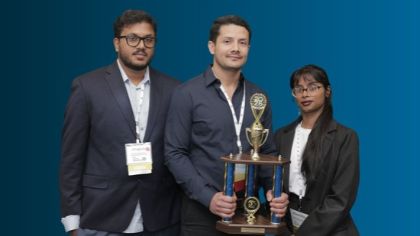
A team from Louisiana State University earned third-place honors in the 2026 Student Hygienic Design Competition. Learn how they approached the challenge and what the competition meant to them.
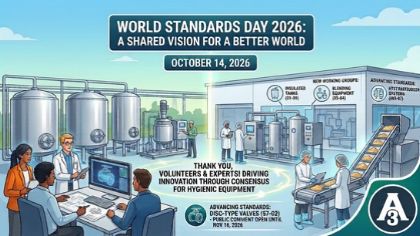
At 3-A SSI, this year's World Standards Day arrives at an especially appropriate moment. Across the organization's standards-development program, technical experts representing equipment fabricators, processors and users, regulators and other stakeholders are actively participating in the development and maintenance of hygienic equipment standards.

Observers are sought for 10 active 3-A SSI Working Groups

A proposed revision brings 57-02 in line with the updated General Requirements. You have until Nov. 16 to weigh in.


