


Search

Search
Certifications
News & Events
3-A Knowledge Center

Every 3-A Sanitary Standard and Accepted Practice starts in a room full of people who know the equipment: processors, fabricators, and regulators. They bring different priorities to the table. That mix of perspectives is what makes a Standard work in the real world.
Right now, observer seats are available on 10 active Ad Hoc Working Groups:
Standards decisions don’t happen in a vacuum, and they don’t happen overnight. Observers watch them take shape. You’ll get real-time insight into the direction of technical discussions affecting the equipment that matters to you, long before a draft reaches public comment.
That vantage point pays off in three ways:
Although observers may not vote on draft documents, they can be asked to participate as a voting member if a voting member seat becomes open.
The 3-A Sanitary Standards and Accepted Practices development process relies on the expertise of volunteers who participate in Ad Hoc Working Group meetings. That has always been the model, and it is why 3-A documents carry the weight they do.
Ready to raise your hand? Apply now to serve as an observer.
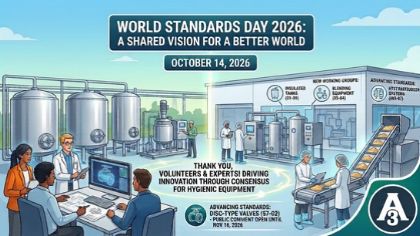
At 3-A SSI, this year's World Standards Day arrives at an especially appropriate moment. Across the organization's standards-development program, technical experts representing equipment fabricators, processors and users, regulators and other stakeholders are actively participating in the development and maintenance of hygienic equipment standards.
A proposed revision brings 57-02 in line with the updated General Requirements. You have until Nov. 16 to weigh in.
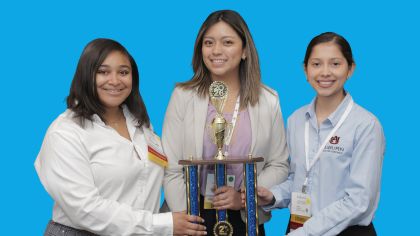
A team of poultry science students from Auburn University earned second-place honors in the 2026 Student Hygienic Design Competition with a novel solution based in physics.

3-A SSI invites volunteers for five new Ad Hoc Working Groups to revise four 3-A Sanitary Standards and one Accepted Practice.


